
The concrete application stays vague
Technical properties are there, but it doesn't become clear which application, environment or audience the product is intended for.
Product information · GEO · AI visibility
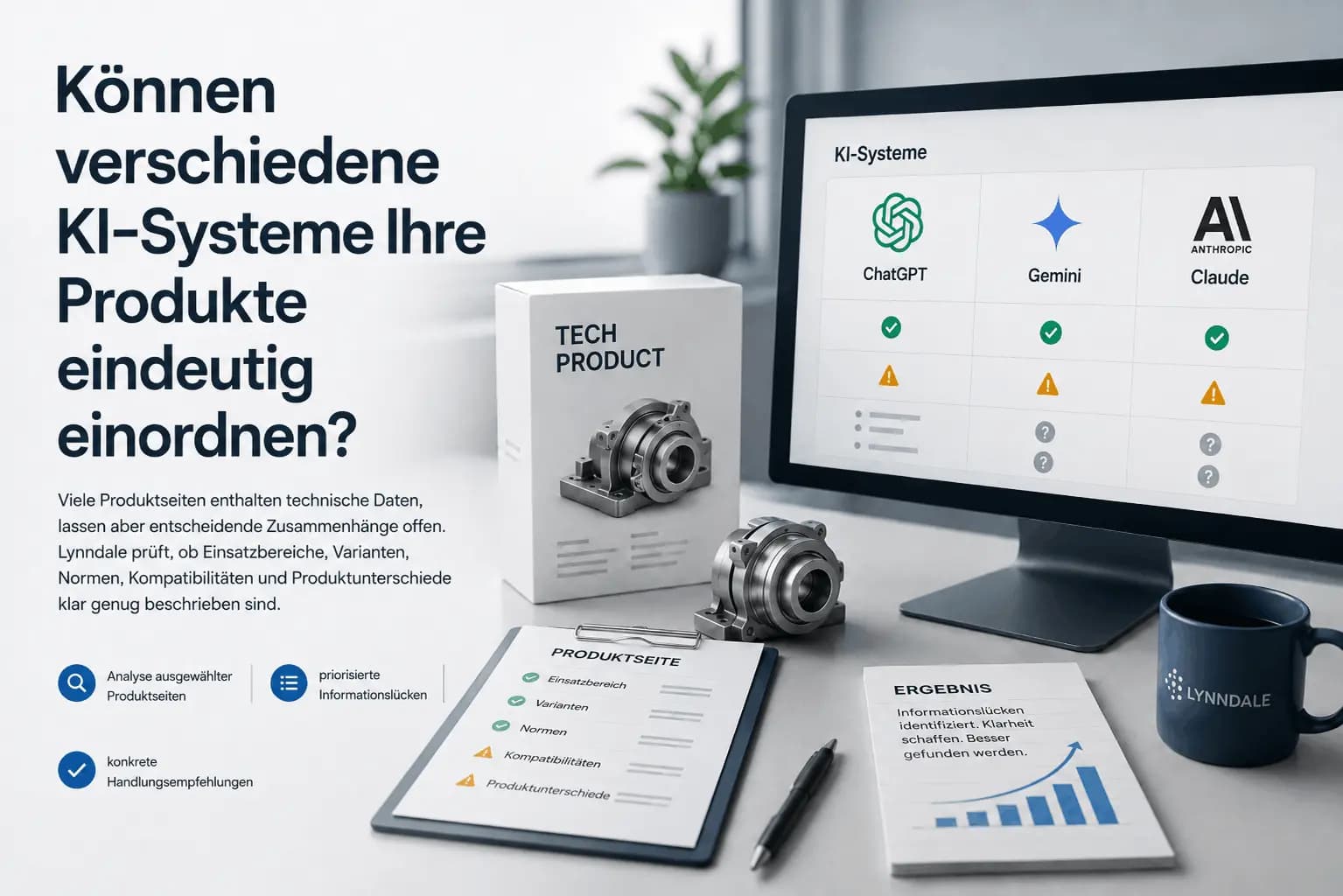
Many product pages contain technical data but leave decisive connections open. 10LYNNDALE checks whether applications, variants, standards, compatibilities and product differences are described clearly enough.
Analysis of selected product pages – prioritised information gaps – concrete recommendations
Core question
A product can be classified clearly when it is recognisable what it is, what it is used for, how variants differ, what it is compatible with and which limits apply. Individual data fields or generic benefits often fail to show these connections completely.
Technical properties are there, but it doesn't become clear which application, environment or audience the product is intended for.
Products differ only by article number, colour or dropdown. The decisive technical differences stay invisible.
A standard or product classification is mentioned but not explained. That leaves open what it actually means for the choice.
Product page and attributes contain only basic information, while decisive details are found exclusively in a PDF.
Requirements
Product type and application
What is the product and which concrete job is it intended for?
Technical features
Which properties influence selection and use?
Standards and approvals
Which requirement is met, and what does it mean in practice?
Variants and differences
Which version fits which use case?
Compatibility
Which materials, machines or systems does the product work with?
Limitations
Under which conditions is the product not suitable?
More text doesn't automatically solve the problem. Begriffe wie „hochwertig", „robust" oder „vielseitig" erklären weder den konkreten Einsatz noch die Unterschiede zu einer Alternative. Entscheidend ist nicht die Textmenge, sondern die fachliche Eindeutigkeit.
Practical example
General description
"Self-adhesive reflective film for versatile applications. Durable, flexible and available in several colours."
Clear classification
Self-adhesive technical reflective film for permanent identification and marking applications.
For flat, suitable surfaces indoors or outdoors – depending on the product version.
The versions differ in reflective performance, colour, material structure and adhesive system, among other things.
The right variant depends on the surface, duration of use, stress and the required technical properties.
Suitability, standards and processing instructions must always be stated per product.
Example structure – not a specification of an actual product
The second version is not better because it is longer. It makes visible which information matters for selection, differentiation and use.
Consistency
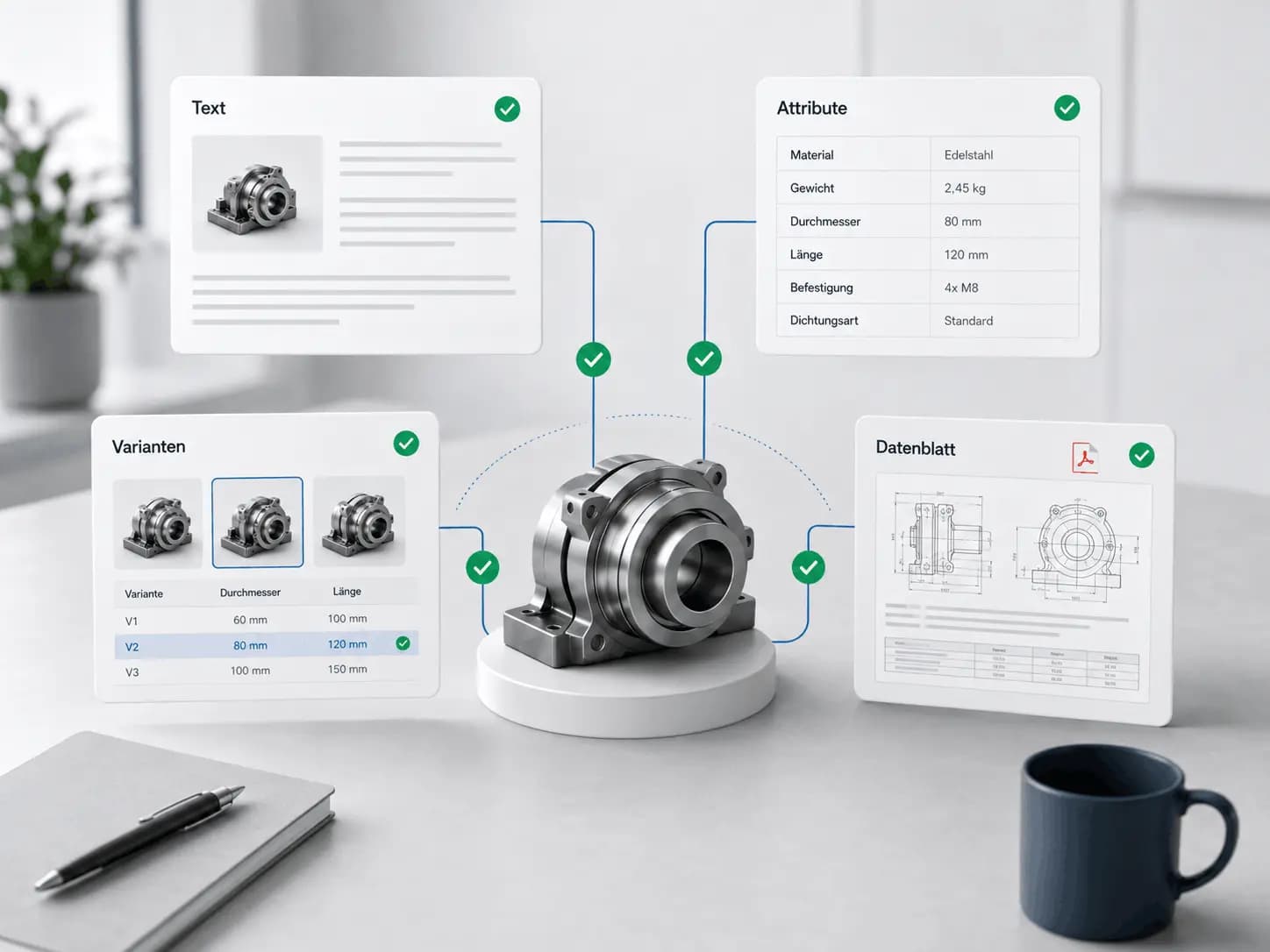
A product is not classified by its description text alone. Properties, variants, tables, compatibility details and technical documents all contribute to the overall picture. It becomes a problem when terms differ, details are missing or the same property is described differently in several places.
The text provides the context. Attributes and tables provide unambiguous facts. Beides muss konsistent sein.
Scope of services
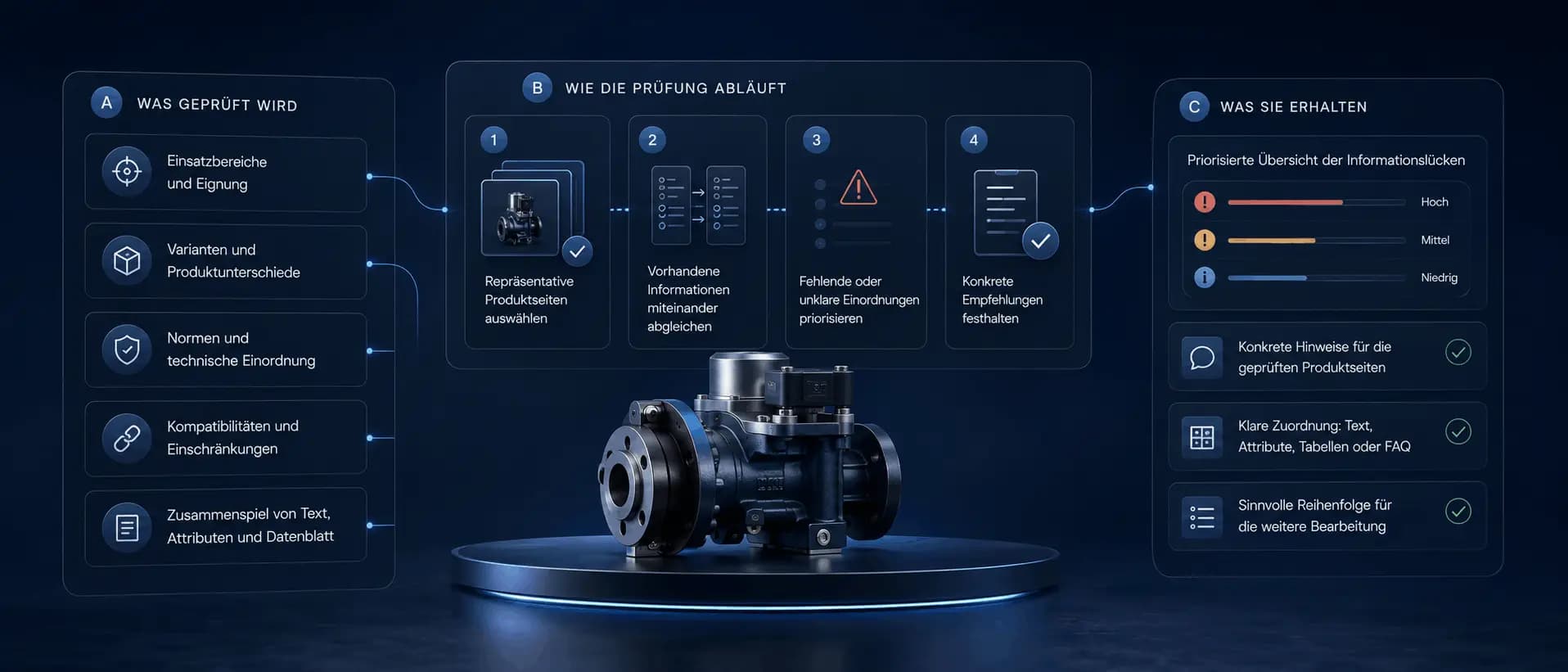
10LYNNDALE reviews selected product pages and shows precisely which information is missing, stays unclear or isn't clearly linked together.
A – What gets checked
B – How the review works
C – What you receive
Procurement perspective
If these questions stay open on the product page, AI systems also lack the basis for a reliable classification.
Is this check right for you?
Send an enquiry
Even a sample of product pages reveals which information gaps recur across the range. 10LYNNDALE reviews the existing content and shows where classification, attributes or page structure should be extended.
Have your product information reviewed →FAQ
No. What matters is not length but whether the important information is present clearly and understandably. A short text can be enough if it names application, variants and limitations clearly.
Technical data delivers facts. What is often missing is the classification: which application a product suits, how it differs from similar products and which variant to choose for which need.
No. Existing texts, properties and data sheets can often be extended and connected more effectively. Recurring information gaps can frequently be fixed across entire product groups.
Yes. They should, however, be extended with your own information where applications, differences, selection criteria or practical classification are missing.
No. Nobody can guarantee a mention in a particular AI system. The aim is to improve the professional and technical conditions so that products can be understood, classified and considered for relevant questions.